Electrical Service Upgrade, Part 1
When I moved into this place three years ago, one of the “major” items the inspector noted was the electrical service. Well, duh. I mean, look at this:
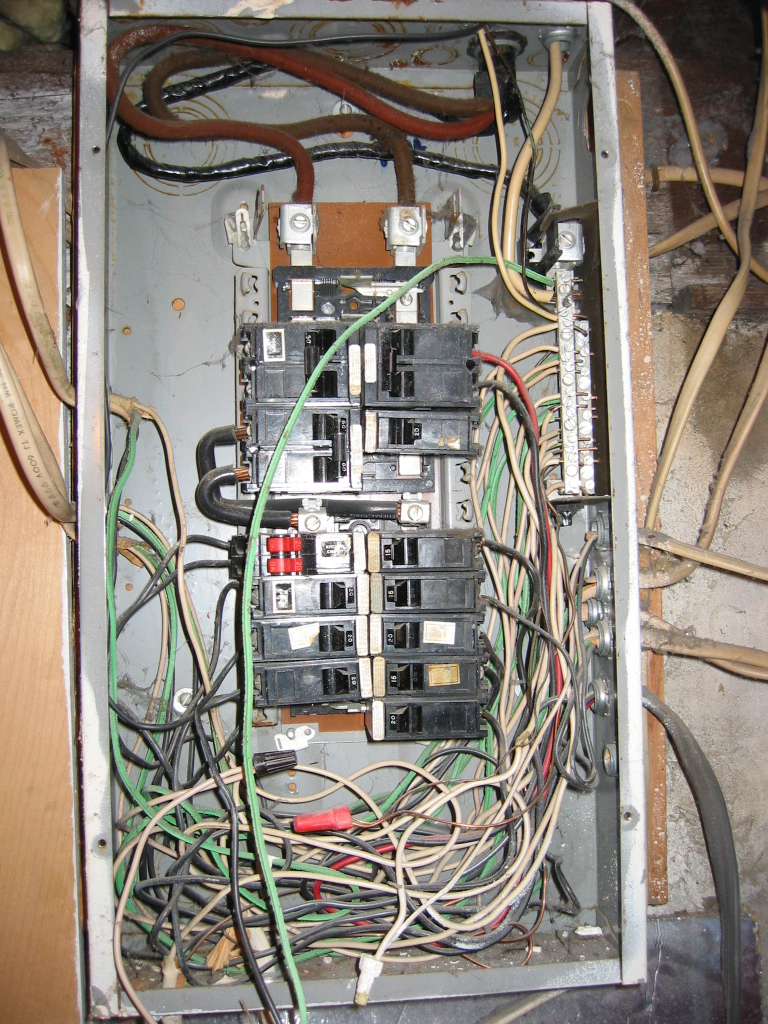
And this:
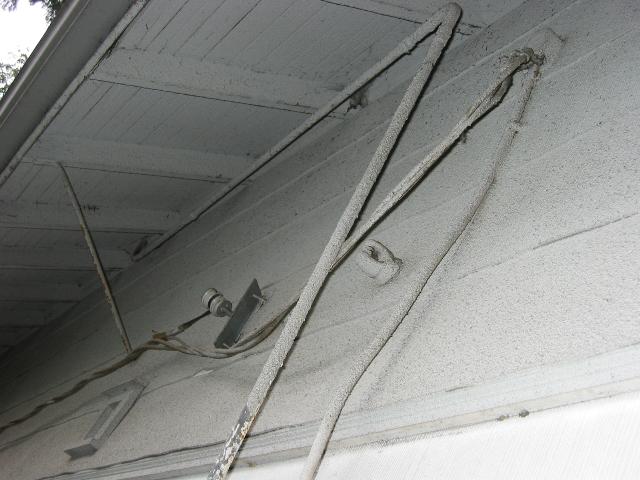
Yes, that’s the service-wire anchor that’s pulling away from the house. Very “Mickey Mouse”, as my electrician friend said to me the other day.
If this was an obvious item, it’s unfortunate the inspector didn’t find the less obvious problems with the house. Had he, I could very easily have negotiated a better price. Lesson: hire an inspector who you trust to find all the “major” items, even if they’re hidden. (In my case, severely rotted structural posts. Look for them in a future post.)
In any event, I’ve finally made it a priority to upgrade the electrical service. A few months ago I got sticker shock when I had a couple electricians come over and give me $3000 + estimates. Ugh – and that was for basic service replacement. If they had done what I wanted, like move the panel a bit and change the service entry location, the price would have gone even higher.
Fortunately, Trissa has a friend whose husband is an electrician. So we invited these nice folks over for dinner, and I got to show our problem to an expert, for free. He got me started by having me get my grounding situation under control (we needed to run a 4 gauge copper wire from the panel to where the water supply enters the house, and we needed to plant two 8’ grounding stakes in the side yard).
With that done, I drew up a basic plan detailing what we currently have, and what I wanted to achieve. The main issue was clearances. The conductor coming to the house needs to be at least 10 feet above where someone might stand. At our house, the current service wire is about 8 feet above the front porch, and is below the roof line. A solution would have been to raise the wire above the roof line, but that would have brought tree branches into play. Fortunately, there is enough room to raise the wire 2 more feet and have it still enter below the roofline. More on this later.
The important thing is that I drew up my plan using Microsoft Visio, and showed it to my electrician friend. He was apparently impressed and helped me create a bill of materials and task list for the project. #1 on the list is the permit, which is essential. The permit cost me $156, and means an inspector will come ‘round when I’m done to make sure the work is up to code. This is crutial, because if we ever had an electrical fire or incident, I want the insurance company to write us a check and not question the fact that I knew what I was doing when I replaced the service. And, I very much don’t want to have an electrical fire or incident.
The permit office is an interesting place. I went on my lunch break, already having downloaded and filled out the form I would need. It was a basic form, asking only my name and address, and a description of what I’m doing. In this case it was “electrical service replacement / upgrade, 200 AMP.” For this project, a documented plan wasn’t necessary (even though I had created one.) I waited for about 15 minutes, the whole while listening in on other folks’ issues. One woman wanted a new driveway installed, apparently close to a busy intersection. Good luck.
When I was called up, it took two whole minutes before they sent me over to the cashier to pay my $156. That’s a lot of money, but it is well spent.
Now the fun part: shopping. I bought all of my supplies at Home Deposit and and not so-Lowes. I would have bought it all at HD, but they didn’t carry the SquareD QO 200 AMP 40/40 (40 circuit, 40 spaces) panel that I wanted. This I bought from Lowes ($208), and had to return it and get another when I found that the first one had been crushed in its unopened box. Next to the panel, the copper cable was the most expensive component, running $1.20/foot for the 2/0 (pronounced “2 aught”) gauge. The main conductors are 2/0 copper wire, and I needed a total of 120 feet of that (need two conductors for the 60’ run), and the neutral is 1/0 copper wire. I spent roughly $200 on wire. Everything else was pretty inexpensive by comparison: 2” electrical-grade PVC conduit and fittings ($50), new meter head ($30), and some miscellaneous stuff like white electrical tape to mark the neutral wire ($3.49). All said and done, my pre-tax running total for the permit and materials is $822.
In my next post I’ll detail the “build”; that is, installing the PVC conduit and running the conductors into the new panel.
1 Comment
Chloe·January 18, 2005
It will be great to have an electrical panel that doesn’t buzz everytime you use a tool in the shop!